
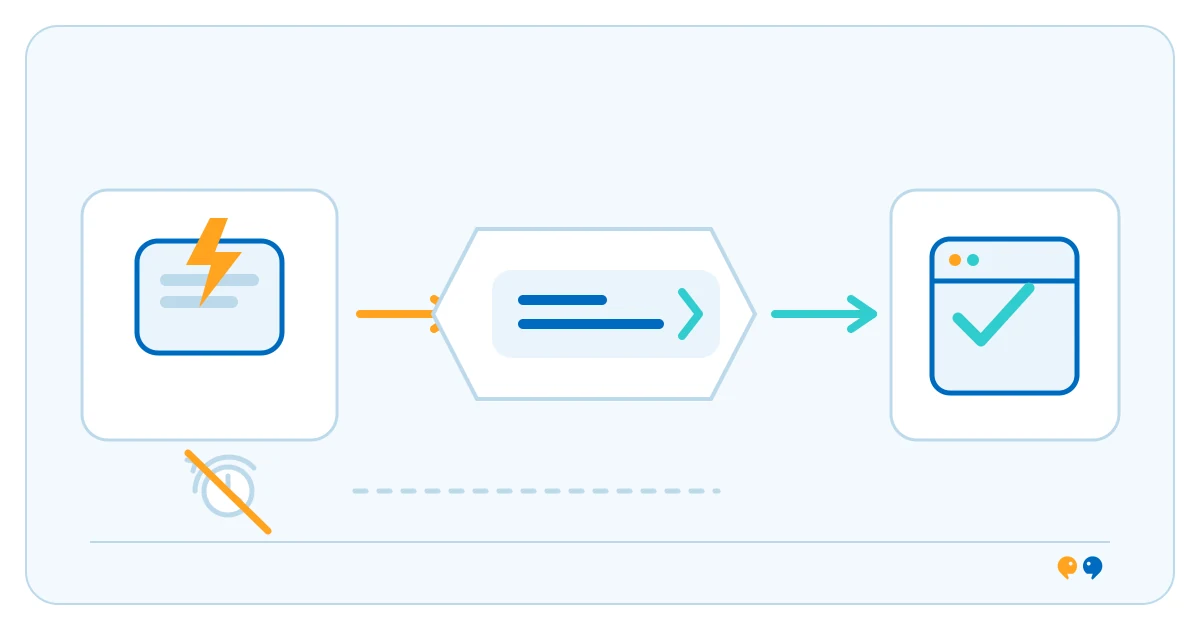
A webhook is an HTTP request sent to a configured endpoint when a subscribed event occurs. Instead of repeatedly asking a service whether something has changed, a receiving system can be notified when the sender reports an event. GitHub’s webhook documentation describes this event-based delivery and contrasts it with intermittently polling an API.
How a webhook works
The receiving application provides an endpoint URL and the sender is configured to report selected event types. When an event occurs, the sender delivers a request with event data. The receiver checks that the request is authentic, validates the fields it needs and then performs an allowed action, such as recording the update or placing it in a queue for later processing.
Illustrative business example
Illustrative example: When a delivery provider reports that a parcel status changed, a retailer’s system could receive a webhook and update the order timeline. Staff can then see the reported status in the order system. This depends on the provider’s event data and the retailer’s integration design.
Webhook, API and workflow automation
A webhook is a way to deliver an event notification. An API defines the interface for requesting data or operations; a receiver may call an API after a webhook arrives to fetch full details. A workflow automation uses triggers, rules and actions to coordinate work, and a webhook can act as one of its triggers. Read what an API is and how workflow automation works.
Operational limits
Delivery is not the same as successful processing. Endpoints can be unavailable, payloads can change, and senders may retry a request, so the same event can arrive more than once. Design the receiver to handle retries safely, record delivery status, validate requests and avoid treating an unverified payload as trusted. Confirm how the sender handles retries and failed deliveries before relying on time-sensitive updates.
For a service-focused overview, see technine.io’s system integration and automation service.
Frequently asked questions
Is a webhook an API?
It uses an HTTP endpoint, but the terms describe different things. A webhook delivers an event to a receiver; an API is an interface through which software requests data or an operation.
Does a webhook guarantee that an update is processed?
No. A request may fail to reach the endpoint or fail during processing. The sender and receiver need a defined approach for retries, error records and recovery.
Can the same webhook arrive more than once?
Yes. Senders may retry after a timeout or delivery error. Receivers should be designed to recognise repeats so they do not apply an event twice.
Primary source: GitHub Docs: About webhooks