
The previous article introduced PayPal, one of the major payment gateway brands. PayPal supports up to 200 countries and 26 currencies, but it does not support checkout directly inside every eCommerce website, creating some inconvenience for merchants and customers. This article introduces Stripe, a payment gateway often compared with PayPal.
Payment Gateway: Introduction to Stripe
Stripe’s pricing model is relatively simple, and it focuses on ease of operation and usability. Its advantage over PayPal is that customers can complete payment inside the eCommerce website, creating a more convenient transaction experience. Stripe also supports Alipay transactions, which is useful for eCommerce businesses serving the China market.
In recent years, Stripe has become a well-known payment gateway and has partnered with major brands including Shopify, Lyft, Adidas, Pinterest, Kickstarter and Indiegogo. Beyond online shopping payments, Stripe also provides a popular service that helps non-US companies handle US bank accounts, tax IDs and related setup. However, applying for this service may take time.
Like other payment gateways, Stripe allows customers to enter credit card details the first time and avoid re-entering the same information for future payments. This creates a friendly user experience and can reduce cart abandonment.
The limitation is that Stripe supports fewer countries than PayPal. PayPal supports around 200 countries, while Stripe supports fewer markets. Even so, Stripe’s simple operation attracts many merchants and customers.
Advantages of Stripe
Although Stripe launched in 2011, following PayPal’s founding in 1998, its recent performance has been strong enough to compete directly with PayPal. What are Stripe’s strengths?
Application Process
Stripe’s application process is simple. Applicants only need to fill in basic personal information such as email and name. PayPal’s application process is comparatively more complex and requires a series of personal and company details.
Payment Interface
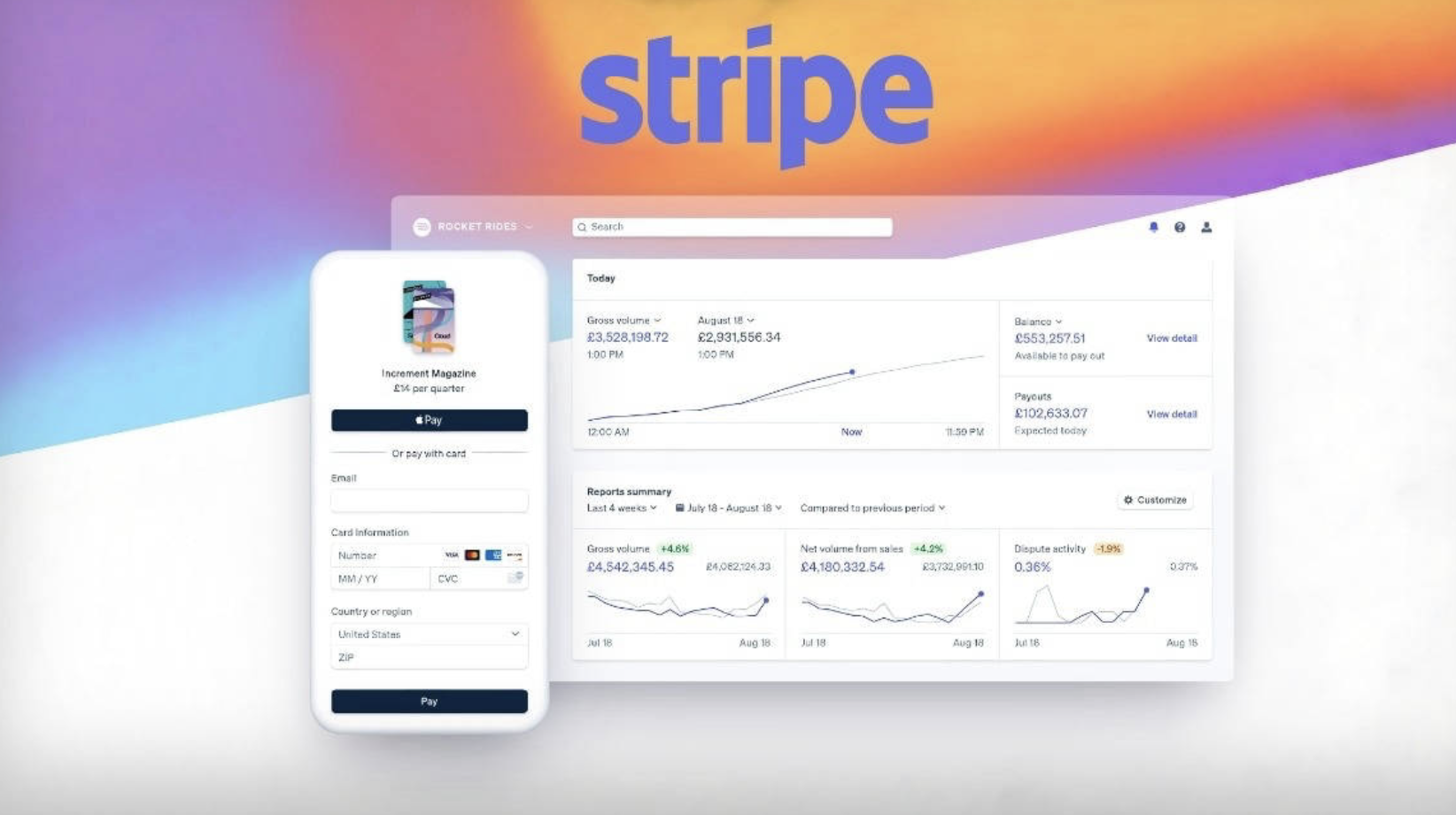
Stripe users can pay directly on the website they are browsing without leaving the page. The payment process is fast and improves user experience. With PayPal, users may need to leave the eShop page to complete payment, which is more complex and can increase customer loss.
Transaction Fees
Stripe has emphasized transparent pricing since launch and states that there are no hidden fees. Stripe’s transaction fees are generally lower than PayPal’s. It charges around 3.4% plus HKD 2.35 per transaction. Fees can be lower when Stripe users connect Alipay or WeChat Pay, reaching around 2.2% plus HKD 2.
Customer Service
Compared with PayPal’s email-based contact method, Stripe provides more convenient support. Users can use website chat to speak directly with developers or customer service staff, helping resolve issues faster.
Data Analytics
Stripe presents data in charts, which is clearer and easier to understand than text-based PayPal reports. Users can identify issues more easily and make business improvements.
After these two articles introducing payment gateways, which option do you think is better: Stripe or PayPal? Before deciding, first understand your business needs and focus on improving the pain points in your current operation.
Translation supported by AI.
Putting this into practice
Review how existing systems exchange data, where approvals belong and who handles failed transactions.