
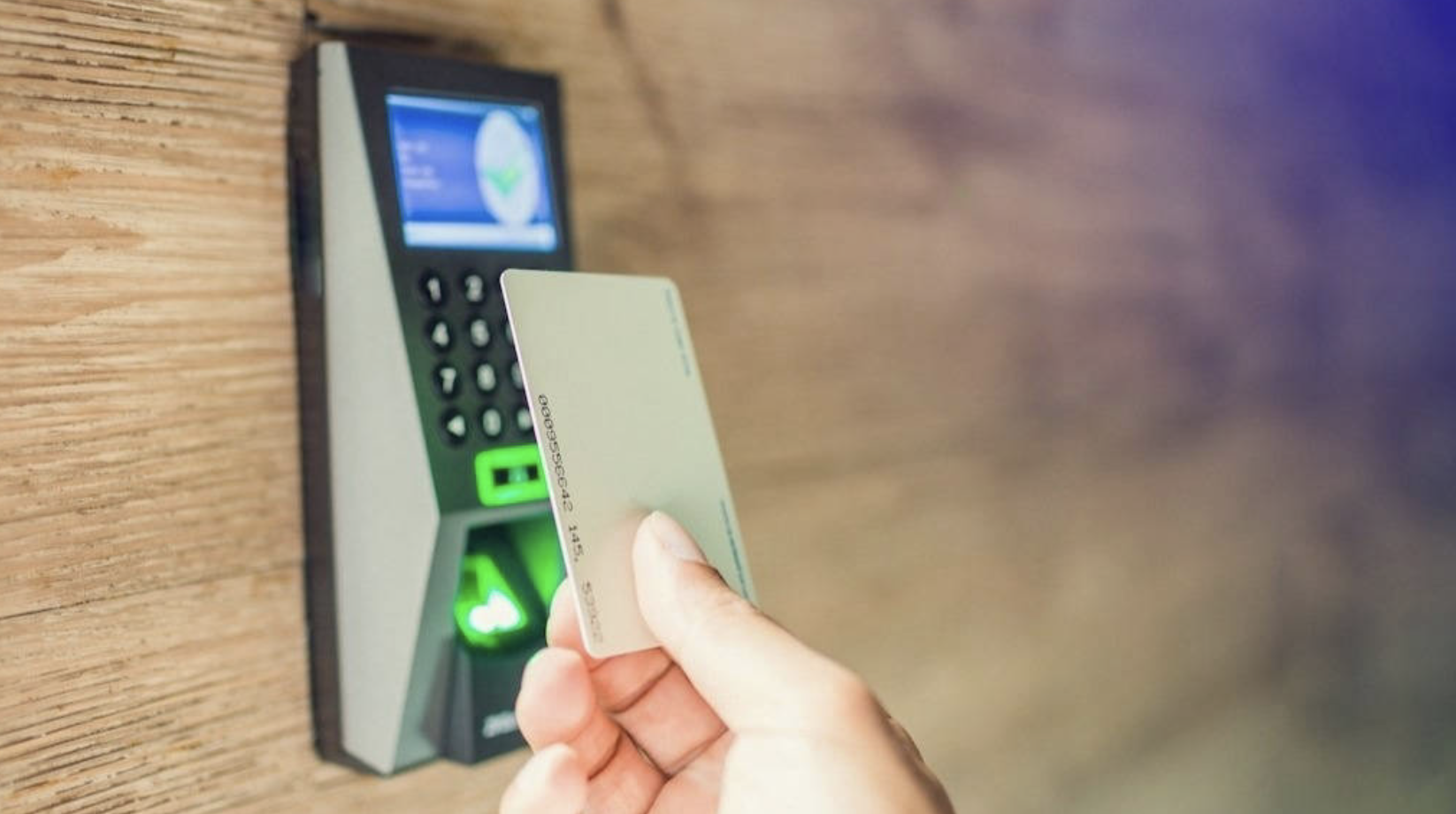
Employees traditionally clock in at a card machine when arriving at work and clock out when finishing the day. This marks the official start and end of work. However, this model has many drawbacks. A common example is that when several employees arrive at the same time, clock-in times may be slightly delayed, and some employees may appear late even when they arrived on time.
As technology has advanced, this model has gradually been replaced by Human Resources Management systems.
Practical Uses of HRM Technology
Today, HRM systems can support different check-in methods and use access control systems for management. These include online check-in, mobile app check-in, GPS positioning, and facial recognition to accurately record attendance time and location.
If employees are assigned to a client or partner company for remote or offsite work, HRM technology becomes especially useful. These mobility-supporting technologies reduce the chance of incorrect clock-ins and help manage attendance records effectively.
Integration With Access Control Systems
Traditional access control systems generally only controlled the number of people entering and managed visitor identity. After continuous improvement, access control can now become one part of attendance management.
Access control systems are often used with card readers. When an employee taps a card to enter the office, the activity information is sent to the company’s HRM system. This accurately records working time and automates the process, reducing HR workload.
In addition to card readers, companies can use mobile apps, company WiFi, and GPS. This creates a new check-in model.
Using Facial Recognition Systems
Many service industries employ large numbers of freelancers, such as beauty salons and hair salons. Because staff mobility and visitor flow are high, management can become confusing.
Traditional management methods require extra manpower to update attendance records and calculate commissions, which increases the chance of errors. Facial recognition can solve this problem directly and effectively. A unique face is difficult for others to imitate, so misunderstandings are less likely than with other attendance methods.
New technology-based attendance methods can be applied across different industries and help enterprises manage human resources allocation more effectively. Integrated HRM solutions and access control systems can include the technologies above and connect with other tools according to business needs.
As the AI era arrives, more commercial IT systems are adding AI elements beyond HRM. technine will continue introducing these applications in future articles.
Translation supported by AI.
Putting this into practice
Review how existing systems exchange data, where approvals belong and who handles failed transactions.