
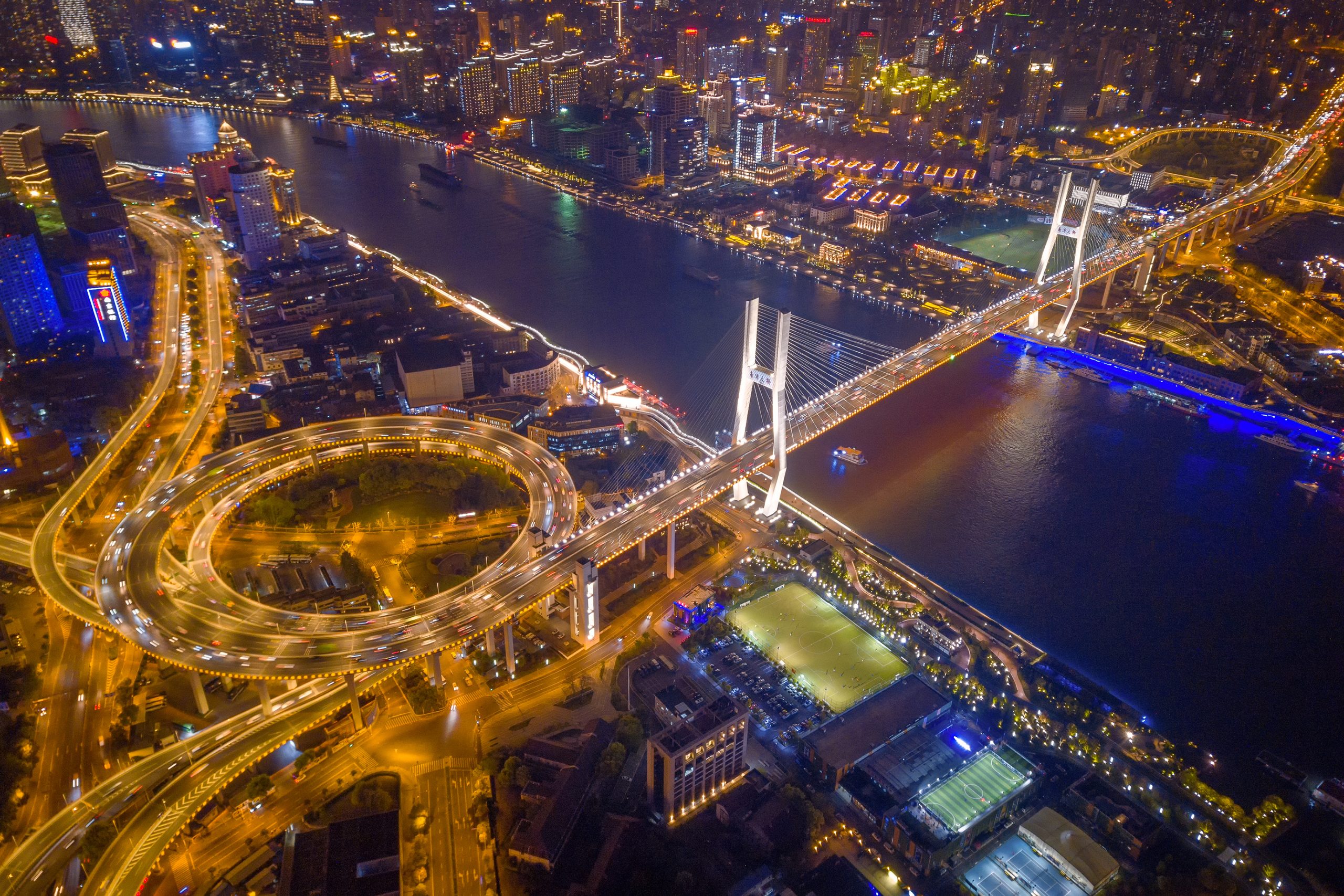
Since reform and opening up began in 1978, China’s economy has expanded rapidly and urbanization has accelerated. By 2025, about two-thirds of China’s population is expected to live in cities, making it the country with the world’s largest urban population. Rapid national development brings clear benefits, but it also creates urgent challenges such as resource shortages, traffic congestion and high carbon emissions. Smart cities have therefore become a major development focus in China.
Smart City Pilots Began in 2012
In December 2012, China’s Ministry of Housing and Urban-Rural Development officially issued a notice on launching national smart city pilots. The notice stated that selected cities would integrate innovative information technology into urban planning. The pilot period would last three to five years, with departments responsible for assessment and a rating system based on one-star, two-star and three-star criteria.
One month later, the ministry announced the first batch of 90 pilot cities, including major cities and regions such as Beijing, Tianjin, Shanghai, Guangdong and Fujian. From 2013 to 2015, more smart city pilots were added. The ministry’s pilots have now reached 290. Other bodies, including technology, surveying and mapping, geographic information and industry authorities, have also supported smart city development. Statistics indicate that by 2022, China had more than 780 smart city pilots nationwide.
Smart City Development Cannot Be Completed Overnight
According to county-level data from China’s 2020 population census, China has 105 large cities and more than 500 small and medium-sized cities by population scale. China is vast, and the development pace differs greatly from place to place. The level of development between cities can vary significantly. In cities with low information technology adoption, using advanced technologies before infrastructure is mature may create the opposite of the intended result.
China’s government has therefore adopted a practical one-city-one-strategy principle. Each city can create a smart city development plan based on its local conditions instead of following a single fixed standard. This makes the solutions more feasible and encourages healthy competition between cities, helping discover more innovative and efficient directions for smart city development.
For first-tier large cities such as Beijing, Shanghai, Guangzhou and Nanjing, smart city initiatives often prioritize transport, healthcare, the environment, education and other livelihood-related areas. For second-tier large cities such as Haikou, Yantai, Guilin and Datong, the priority may be to address weak IT infrastructure before introducing smarter measures. For small and medium-sized cities and districts such as Taicang High-Tech Park, Shenyang Xinmin Park and Shenzhen Qianhai, the focus may be on building data centres and basic networks to improve competitiveness and support future economic and social development.
Lessons for Hong Kong’s Smart City Development
Although Hong Kong is only a tiny fraction of China’s land area, development levels still differ between districts. For example, fibre network coverage in remote villages remains relatively low, and related network deployment is expected to continue until 2026. When planning smart city policy, the government should consider these district-level differences.
Building a smart city is long-term work. It requires integrating large amounts of technology and data, supported by infrastructure and participation from different sectors. Digitalization is clearly a future direction, and Hong Kong already has a smart city blueprint. Beyond adding more IoT smart devices, the more important task is helping the public accept and adapt to digital life.
Through strategic allocation of resources, Hong Kong should first try to ensure that every district and every person starts from a fairer development point. Narrowing the digital divide early will allow citizens to genuinely benefit from the convenience brought by smart cities.
Translation supported by AI.