
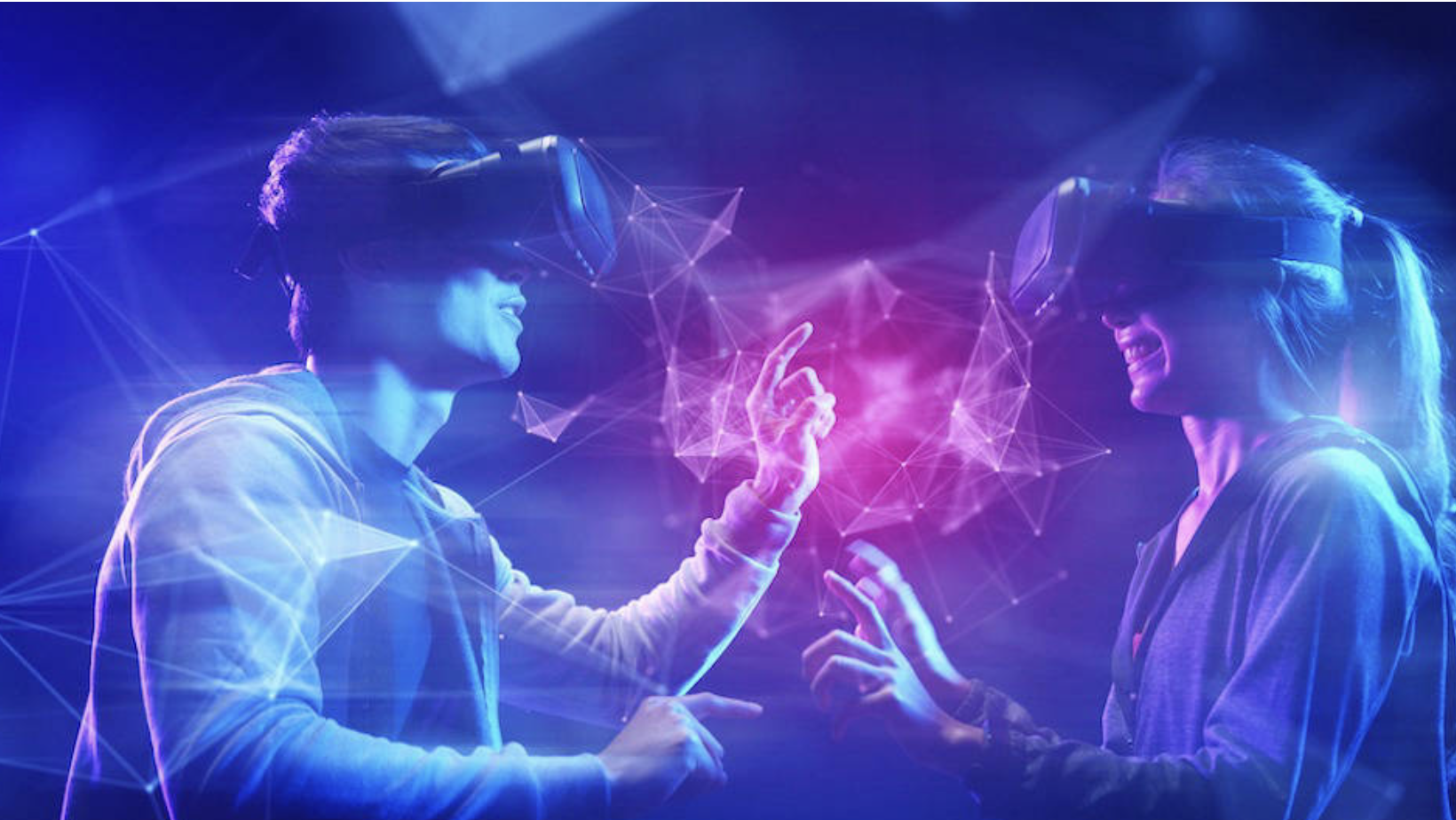
At the end of October, social media giant Facebook officially changed its name to Meta and announced that it would prioritize the Metaverse in future development. The market reacted strongly, and many gaming token prices rose shortly afterward. Blockchain games became popular again, with The Sandbox and Decentraland drawing international attention. Can you imagine a piece of virtual land, represented as an NFT, selling for millions of dollars?
What is the relationship between the Metaverse and gaming tokens? Let us explain it step by step. If you are still unfamiliar with the Metaverse, GameFi, and NFTs, this article is for you.
The Metaverse Concept Appeared in 1992
The term Metaverse comes from Neal Stephenson’s science fiction novel Snow Crash. In the story, the protagonist Hiro Protagonist enters the Metaverse through virtual reality and goes on an adventure. In that world, people can freely design their characters, create virtual identities, and live in a virtual world. In other words, the Metaverse can be understood as a form of virtual reality.
If “virtual reality” still feels abstract, think of it as an online world built around a virtual environment. The film Ready Player One presented a strong example of the Metaverse worldview. Everyone has a three-dimensional and sensory virtual identity in the Metaverse. They do not only play games there; they can also interact and collaborate with other users. It is not purely virtual, but rather places real-life activity into another space.
Has the Metaverse already been realized? Not yet, but extended reality is possible. Meta previously developed haptic gloves that allow users to touch, feel, and control virtual objects. Compared with only visual and audio experiences, touch makes virtual reality more complete. Many companies around the world are optimistic about Metaverse development.
The Rise of the Metaverse Boosted Some Gaming Tokens
After Facebook changed its name to Meta, the Metaverse concept received wide attention. Many people connect the Metaverse with games. This is not entirely wrong, because playing games in a virtual world can be part of life there. Beyond making games feel more realistic, earnings from games can also become recognized assets in the real world. This helped blockchain games regain attention.
GameFi Means Game + NFT + DeFi
To understand this topic, you need to understand GameFi and play-to-earn. GameFi combines three concepts: games, NFTs, and DeFi.
DeFi means decentralized finance. Its goal is to decentralize financial transactions so that no third party exists between traders, while records and verification are stored automatically on the blockchain. NFT means non-fungible token. Unlike mainstream ERC20 tokens, many NFTs use the ERC721 standard. Each NFT has unique value and cannot be exchanged on an equal basis, though buyers can purchase NFTs with Ether.
In simple terms, GameFi is blockchain-based gaming. Characters, items, and assets in the game can be NFTs. Players can earn game tokens or rare items by completing tasks. Many game tokens help maintain the game ecosystem. Because these tokens and NFTs have tradable markets, players can freely buy and sell earned NFTs on NFT marketplaces and realize play-to-earn.
Moving Beyond Traditional Views of Games
In the past, games were mainly entertainment. Game tokens usually had no real value and could not be used in other games. GameFi changes this by allowing players to earn while playing.
Traditional game tokens can only be used inside the game and cannot be directly exchanged for cash. In GameFi, tokens earned by players can trade like cryptocurrencies and be exchanged for cash or other tokens. This makes play-to-earn different from older models where income depended on offline trading of virtual items or characters.
Some people still question the value of play-to-earn. However, virtual land in The Sandbox has sold for more than USD 4 million, and major companies such as Nike and Adidas have entered similar virtual worlds to establish their presence. This shows that play-to-earn has become difficult to ignore.
The Sandbox: A Pioneer in Metaverse Gaming
When discussing The Sandbox, its game token SAND must also be mentioned. The token once rose sharply in a single day and attracted significant market attention.
The Sandbox is a blockchain gaming platform owned by Hong Kong game developer Animoca Brands. Players can build their own worlds, create items, and even develop mini-games for others to play. SAND is the game token in The Sandbox and has functions including payment, staking, governance, and voting.
Players can use SAND to buy LAND or purchase NFTs in the marketplace. They may also need to pay SAND as an entry fee to participate in games or visit other players’ LAND. Players can also stake SAND to earn more token rewards, and use SAND to vote on community proposals.
Generally, players can earn game income in three ways: creating NFTs, building mini-games, and buying LAND. Created NFTs can be sold in the marketplace. Mini-games can charge admission fees. LAND owners can charge visitors or rent unused LAND to other players.
Blockchain games are only one way to experience the Metaverse, and they do not fully represent the Metaverse itself. The exact definition of the Metaverse is still developing. But from VR headsets and Meta’s haptic gloves to play-to-earn, many companies now believe the Metaverse is not just imagination. Its era may be approaching.
Translation supported by AI.